
Endless Frontier 2: Idle RPG
ekkorrSimulation
3.929.00 Reviews
- Version
- 1.13.86
- Installs
- 50.00K
- Age Rating
- Everyone
Screenshots
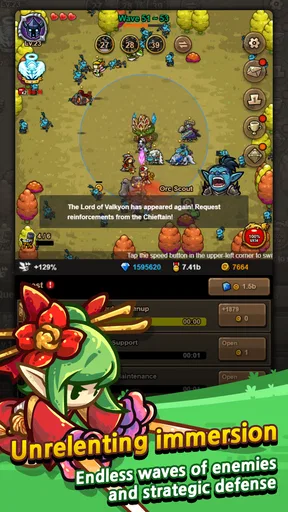


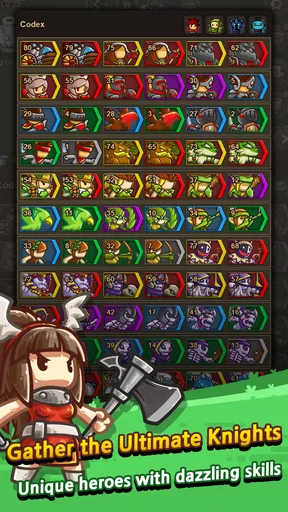
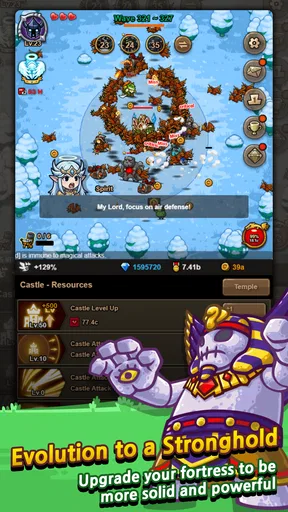
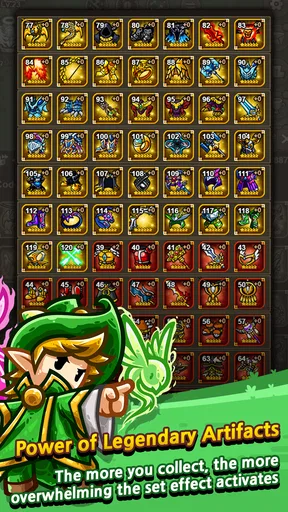
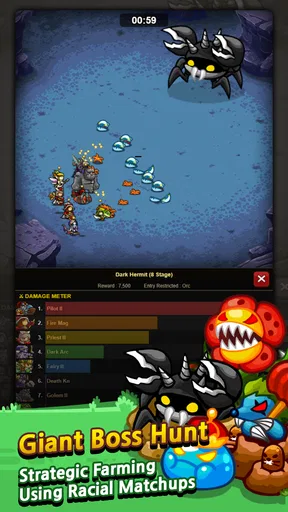
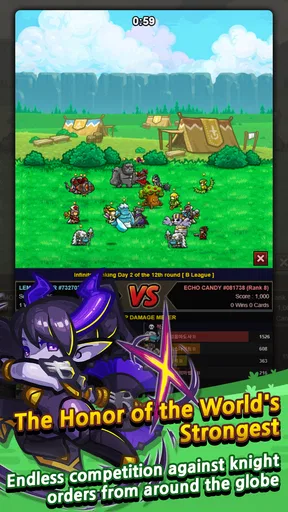
Our Review of Endless Frontier 2: Idle RPG
 Analysis by Appyee
I found Endless Frontier 2: Idle RPG most interesting as a game that can sit quietly on a shared phone while still giving its player meaningful decisions to make. It belongs to the simulation category, but it is really built around an idle defense RPG loop: assemble a hero team, improve it, and let the group handle repeated enemy waves while you return to make adjustments. I would not describe it as a game for everyone in a household, though. It works best when one person owns the decisions and others understand that progress, purchases, and play habits belong to that player.
That distinction matters more than it may seem. On a personal device, an idle game is easy to treat as a small private routine. On a family tablet or a phone passed between people, the same routine can create confusion. Someone may upgrade a character, spend a saved resource, or simply change the team before the main player returns. My experience with this kind of design is that the game feels much better when the household agrees on who is playing and what “helping” actually means.
How the idle defense loop feels in everyday use
I find the everyday appeal of this idle defense game comes from having something useful to consider each time I return, rather than needing to stay glued to the screen. In this section, I’ll focus on how those brief visits can fit into a shared-device routine and why a little planning makes them smoother. That also sets up the next question: what kind of feedback makes another check-in worthwhile.
A good fit for short visits rather than long sessions
The central appeal is the ability to build a team and defend against continuing waves without requiring constant manual control. I like that structure for ordinary moments: checking the game during a break, making a few improvements while waiting for an appointment, or returning to a device after dinner to see how the team is doing. It gives the player a reason to come back without demanding that every visit become a long gaming session.
The trade-off is that the game’s satisfaction depends on enjoying gradual progress. If you need precise action, direct movement, or a strong sense that every victory came from your own moment-to-moment skill, this may feel too passive. The fun is in preparing the team, noticing where the defense is struggling, and deciding what deserves attention next. That makes it closer to a management habit than a traditional action RPG.
In a shared household, this creates a practical use case. One person can handle the main progression in the morning, leave the phone available for someone else later, and return to the game when there is time. However, I would avoid treating the device like a communal save file. Idle progress can make it tempting for another person to experiment, but experiments are only harmless when the primary player is comfortable with the consequences.
Why team building matters more than simply tapping through
The hero team is the part I would pay the most attention to. It is easy to assume that an idle game plays itself and therefore has little strategy, but the preparation phase is where the player’s judgment has room to matter. A stronger-looking hero is not automatically the right answer for every defensive problem. I found it more useful to think about the team as a complete arrangement rather than chasing one impressive individual.
A practical habit is to make one meaningful change at a time. If I replace several heroes and adjust several upgrades together, it becomes difficult to understand what actually improved the defense. Changing one part, watching the next stretch of waves, and then deciding whether to keep the change gives the game a clearer rhythm. This is especially useful on a shared device, because it leaves a simple explanation for the next person instead of turning the team into an unexplained collection of choices.
Another useful approach is to keep a stable “working” team before testing alternatives. The stable group protects your progress routine, while the experimental changes can be made deliberately when you have time to observe them. I would not constantly rebuild after every small setback. Idle games often make temporary difficulty feel like a demand to spend resources immediately, but patience can be more informative than panic upgrades.
The best household scenario is coordinated, not competitive
Imagine a parent uses a tablet during a lunch break, then a teenager wants the same tablet in the evening. The simplest arrangement is for the main player to finish the important team decisions first and tell the other person whether the game may be opened. If the second player only wants to watch the defense or collect routine progress, that can be fine. If they want to change heroes, spend currency, or explore menus, they should ask first.
This is not about making a game feel formal. It is about protecting the small decisions that give an idle RPG its identity. When another person changes the team without context, the main player may return to a weaker setup and have no idea why. A short household rule—one person manages progression, everyone else treats the save as read-only—can prevent more frustration than any in-game explanation.
Setting boundaries before the first upgrade
Because the game is free, installing it is easy, but free does not mean the household has no financial decisions to make. The game includes in-app purchases ranging from $0.99 to $99.99 per item. That is a wide enough range that I would establish purchase boundaries before letting a child or guest use the device. The safest routine is to make clear that no purchase is approved simply because a button appears during play.
I would also decide who is allowed to manage the account or store confirmation process. A child may understand the heroes and waves perfectly well while still not understanding that a virtual purchase can charge real money. The game carries an Everyone content rating, which makes it broadly approachable from an age perspective, but an age rating is not the same thing as financial readiness or permission to buy.
For a shared phone, I would keep the game associated with the intended player’s normal device and store arrangement rather than casually handing the device around during an active purchase screen. If the phone has separate user profiles or household account practices, use those boundaries consistently. I would not assume that changing the person holding the device changes ownership of progress or responsibility for spending.
What to agree on when several people want to play
Coordination works best when it is specific. “Don’t mess up the game” is vague; “you can collect routine rewards, but ask before changing the team” is clear. I would agree on three things: who makes progression choices, whether other people may open the game, and what happens if someone wants to try a different setup. That small conversation is particularly valuable when the device belongs to the whole household.
It also helps to leave a short spoken or written note about the current plan. For example, the main player might say that the present team is being tested and should remain unchanged until the next check-in. This is a useful workflow because idle games can make progress feel invisible. A second player may think nothing important is happening and make changes simply to see a reaction, while the primary player may be deliberately observing the current arrangement.
I would avoid turning coordination into a contest between family members. The game’s structure rewards returning to a long-running setup, so competition over who can alter the team fastest misses the point. If two people genuinely want separate experiences, separate devices or separate supported account arrangements are preferable to sharing one progression path, provided the household already knows how those arrangements work.
Age, trust, and supervision
The Everyone rating makes this easier to introduce in a mixed-age home, especially compared with games built around mature themes. Still, I would judge suitability by the child’s understanding of idle play and purchases, not by the label alone. A younger player may enjoy watching heroes defend against waves but may not understand why an upgrade should wait, why a team should not be changed, or why a purchase needs an adult’s approval.
For older children, the game can become a gentle way to practice planning: choose a team, observe the result, and adjust rather than reacting to every difficult wave. I would frame it as a game with shared rules, not as a reward for constant checking. Idle design can encourage frequent returns, and that may not fit a household trying to protect study time, sleep, or device availability.
Trust also includes honesty about mistakes. If someone spends a resource or changes the formation, the best household response is to say so rather than quietly hoping the primary player will not notice. The game is not improved by pretending that every change was intentional. A transparent approach makes it easier to restore the preferred setup and decide whether the person should continue using the save.
Version, access, and what the download means in practice
The current version is 1.13.86, and the game requires Android 8.0 or later. That makes the operating-system requirement worth checking before installing it on an older family phone or tablet. A shared device can be perfectly suitable for casual play, but only if it meets the minimum software requirement and has enough practical room for the household’s other apps and routines.
The game is free to download, and it has passed 50K installs, so it is not an obscure experiment with no visible audience. Its average rating is 3.9 from around 800 ratings, while the store shows 29 written reviews. I read that combination as a reason to approach it with measured expectations: there is enough activity to suggest real interest, but not enough evidence for me to call it a universally loved idle RPG.
The developer is ekkorr. That detail is useful when you are checking the exact app before installing, especially because short game names and sequel-style titles can be easy to confuse in a crowded store. I would verify the developer name, the Android requirement, and the purchase range on the device being used, then make the household decision about who will own the save.
Where it stands beside other simulation and idle games
Compared with a conventional simulation game, this one puts less emphasis on building a detailed town, managing a realistic economy, or controlling a broad environment. The focus is narrower: heroes, defense, repeated waves, and gradual improvement. That makes it easier to understand than a large management simulator, but also less satisfying for players who want a world they can shape in many different directions.
Compared with a manual RPG, the game asks for less direct control. You are not relying on quick reactions in the same way, and the team’s preparation carries more weight than constant combat input. I see that as a strength for players who enjoy planning or who cannot give a game uninterrupted attention. It is a weakness for anyone who wants every battle to feel like a personal performance.
Compared with other idle defense games, the hero-team angle gives the player a more personal set of choices than simply placing generic defenses and watching a timer. The downside is that team decisions can feel opaque if the game does not immediately explain why one arrangement performs better than another. My advice is to treat each adjustment as a small test and judge it over several visits rather than assuming the newest improvement is automatically best.
Small habits that make the experience less frustrating
My first tip is to avoid spending just because the game presents a moment of difficulty. Before using a valuable resource, look at whether the problem is a weak team arrangement, an underdeveloped hero, or simply a wave that requires more time. The idle format makes waiting feel like failure, but waiting can reveal whether the current setup is genuinely stuck.
My second tip is to separate routine maintenance from experimentation. When you have only a minute, collect what you need and leave the team alone. When you have more time, test a change and remember what you altered. This prevents rushed decisions on a shared device and makes it easier to explain the current plan to another household member.
My third tip is to treat purchases as an optional convenience rather than a solution to every obstacle. The presence of items from $0.99 to $99.99 means a small-looking prompt and a very large commitment can exist in the same game. I would never let a child decide in the moment, and I would not use spending to compensate for not understanding the team.
A fourth useful habit is to keep expectations realistic when returning after a long break. Idle progress can make the game feel generous, but returning does not remove the need to reassess the team. If the defense has reached a tougher point, take a calm look at the current arrangement instead of rebuilding everything at once. That method preserves what is working and gives you a better chance of learning from the next change.
Who should choose it, and who should skip it
I would recommend it to someone who likes light RPG planning, enjoys improving a group over time, and wants a game that can be checked in short bursts. It is also a reasonable choice for a household where one person is clearly responsible for the save and everyone understands the purchase boundary. The Everyone rating makes the subject matter accessible, while the idle structure keeps the game from demanding constant attention.
I would skip it if your priority is deep manual combat, a rich simulation world, or a completely frictionless free-to-play experience. It may also be a poor choice for a shared device where several people expect equal control over every game. The more people who make independent changes to one progression path, the less satisfying the long-term planning becomes.
I would be especially cautious with younger players who can access the store account but are not ready to distinguish game currency from real money. The game can be suitable to play together, but “together” should mean watching, discussing, and taking turns under an agreed rule—not assuming that the game itself will solve account boundaries or household supervision.
My household verdict
I see this as a modest, approachable idle RPG with a clear use case: build a hero team, let the defense continue, and return when you have a decision to make. Its strongest quality is convenience combined with enough team management to keep the player involved. Its weakest point is the same convenience, because passive progress and purchase prompts can encourage careless habits if the player is sharing a device or handing it to someone younger.
For my own household recommendation, I would install it only after deciding who owns the progression and how purchases are handled. I would keep team changes deliberate, use short sessions rather than constant checking, and treat the free download as an invitation to try—not as a reason to spend. With those boundaries, Endless Frontier 2: Idle RPG can be an easy game to keep around for quiet breaks and gradual planning.
If you want a hands-on action game or a detailed construction simulator, I would point you elsewhere. If you enjoy watching a prepared team improve and like making small strategic adjustments between everyday tasks, this game is worth trying. My final view is positive but measured: it is best as a personal, calmly managed idle routine, not as an uncontrolled communal save that everyone edits whenever the device happens to be free.
Verdict
Strengths of Endless Frontier 2: Idle RPG
- Idle rewards let you progress even when you are not actively playing.
- Large hero roster offers plenty of team-building and upgrade combinations.
- Quick battles and auto-play make routine stages easy to complete.
- Frequent events provide extra rewards and temporary gameplay goals.
- Guild features add cooperation and useful bonuses for active players.
Limitations of Endless Frontier 2: Idle RPG
- Progress can slow considerably without regular upgrades and resource management.
- Many systems and currencies may feel overwhelming for new players.
- Premium offers and paid packs are frequently promoted throughout the game.
- Higher-tier heroes and upgrades can require significant time or spending.
- Online features require a stable connection for rewards and progression.
Similar Picks in This Category
View All
Truckers of Europe 3
Wanda Software4.3

Town Building Life Simulator
XGame Global4.2

Fidget Toys Trading・Pop It 3D
Freeplay Inc4.7

Sculpt People
CrazyLabs LTD4.4

Scary Teacher 3D
Z & K Games4.2

Hair Tattoo: Barber Shop Game
CASUAL AZUR GAMES4.3
Frequently Asked Questions
What is Endless Frontier 2: Idle RPG?
Endless Frontier 2: Idle RPG is a mobile role-playing game built around automated battles, hero collection, team development, and long-term progression. Players recruit characters, improve their equipment, complete stages, and unlock new features as they advance. Because battles can continue while you are away, the game is designed for users who enjoy incremental growth rather than constant manual control.
Does Endless Frontier 2: Idle RPG require an internet connection?
An internet connection is generally needed for the main game experience, including account synchronization, event content, rankings, advertisements, purchases, and server-based rewards. Some progress may appear to continue through offline or idle systems, but the application should not be considered a fully offline RPG. A stable connection is recommended to prevent missed rewards or synchronization problems.
Is Endless Frontier 2: Idle RPG free to download and play?
Yes, Endless Frontier 2: Idle RPG can be downloaded and played without an upfront purchase. However, it uses optional in-app purchases and may include advertisements or paid convenience features, depending on the current version and region. Free players can make progress, but spending may accelerate summoning, upgrades, resource collection, or access to limited-time rewards.
How does the idle progression system work?
The idle system allows your team to fight and collect certain rewards automatically, even when you are not actively playing. When you return, you can claim accumulated resources and use them to upgrade heroes, equipment, and abilities. Progress is still influenced by team composition and power, so idle rewards do not completely remove the need for strategic development.
Is Endless Frontier 2: Idle RPG suitable for beginners?
The game is approachable for beginners because early stages introduce core systems gradually and automated combat reduces the need for complex controls. Nevertheless, the number of heroes, upgrade materials, missions, events, and progression menus can feel overwhelming at first. New players should focus on one reliable team, avoid spending resources randomly, and read upgrade descriptions before committing valuable materials.
Play our best games!


